How Ordinary People Start Movements That Actually Change Systems
If you've been thinking about starting something but felt held back, this is your sign. Read this guide to starting a movement that creates systemic change when you've no idea where to start.
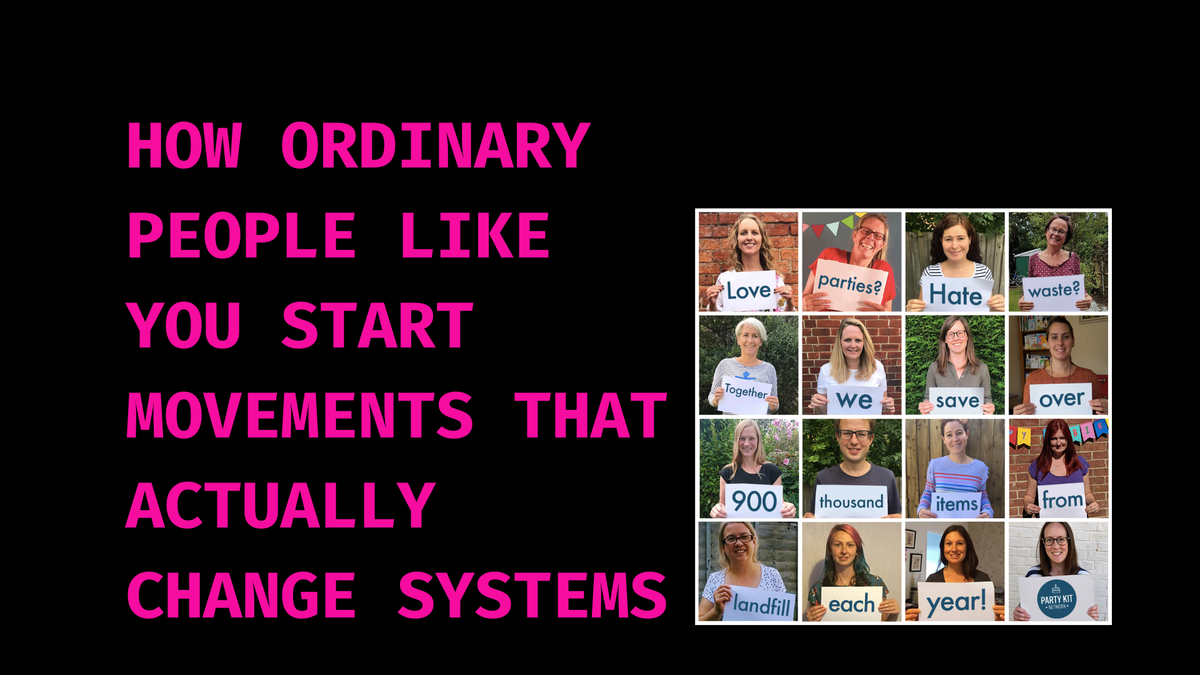
You've noticed a problem. It bothers you. You've mentioned it to friends, vented about it online, maybe even lost sleep thinking about how things could be different. But then comes the paralysing thought: Who am I to start something?
You're not a business person. You don't have funding. You're not sure you have the right skills. You're already stretched thin with work, family, and life. You don't have a ten-year plan or a five-person team.
So the idea stays an idea. But what if that's not actually what's required?
In a recent conversation with Isabele Mack (who built Party Kit Network from a single Facebook post into an international lending library of reusable party equipment) and Charlotte Mason-Kerr (who created No Crap Parties, now reaching thousands on a shoestring budget and passion), we asked them to help us think through this challenge.
What would you tell someone who has an idea but feels completely unprepared to make it happen?
Their answers were remarkably consistent. And remarkably encouraging.
Both have now registered as Community Interest Companies. Both reach thousands of people. Both operate on tiny budgets with volunteer teams. Both started with something simple: a Facebook post, a conversation, or a website built in their spare time.
And neither of them had a master plan when they started.
What they did have was clarity about the problem, a willingness to take one small step, and an understanding that you don't need permission or perfection to begin. You just need to start.
Here's what they learned along the way -and what you need to know before you launch your own idea into the world.
- Start absurdly small. You don't need a website, a CIC status, or a marketing degree. Begin where you are with what you have.
Post in a local Facebook group.
Create an Instagram page.
Organise a coffee morning with interested neighbours.
- Know your problem inside out. Isabele suggests you answer: what's the problem you're happy to stand on a soapbox and rant about? That clarity helps you stay focused and helps others understand what you're trying to do.
- Use your existing skills. Both have marketing backgrounds, but that's not essential. Can you bake? Organise? Write? Whatever you're good at becomes your contribution.
- Find your ally. You don't need to do this alone. Find one person who believes in the idea and can support you (even just by responding positively when you take your first public step).
- Ask boldly. Isabele needed an accountant and asked in a Facebook group—someone volunteered her time for five years without ever meeting her in person. Charlotte asked The Times for coverage and got it. If you don't ask, you don't get.
- Show, don't tell. Rather than arguing that parties should be different, both show what's possible. They share stories and examples of other parents doing it successfully. Seeing it done builds confidence.
- Get into physical spaces. Online work matters, but showing up matters more. Attend local meetings, go to community events, be visible.
- Perhaps the most powerful insight: you don't need to build something massive to create change.
One person borrowing a party kit, one parent trying gift guidance, one friend inspired to do the same - these aren't small wins. They're the beginning of a culture shift.
As Isabele says, some people start party kits without ever joining the official network. They run them in their school community. That's okay. The waste is still avoided. The conversation is still happening.
If you've been thinking about starting something but felt held back, this is your sign.
The only qualification you need is caring about a problem and a willingness to take one small step.
Your ripples might inspire someone else's waves.
You can read and watch the full interview we did with Isable and Charlote here